How to Clean Car Headliner: 5 Rules to Prevent Sagging
Quick fit: Learning how to clean car headliner fabric requires a strict low-moisture blotting method. Never saturate the ceiling fabric with liquid cleaners, because excess moisture dissolves the thin polyurethane foam backing and causes irreversible adhesive failure, resulting in a sagging roof liner.
Vehicle headliners are among the most delicate interior components in any automobile. Unlike durable floor carpeting or vinyl seat covers, the ceiling liner is suspended upside down against gravity, held in place by a heat-cured adhesive layer bonded to an open-cell foam cushion. If you scrub aggressively or saturate the fabric with heavy liquid sprays, that fragile foam layer breaks down, causing the fabric to detach and billow downward into the cabin.
Whether you need to remove stubborn makeup smudges from a sun visor, water mineral rings from a clogged sunroof drain, or oily fingerprints around grab handles, proper technique prevents expensive replacement bills. In this practical guide, we cover the exact mechanical steps for car headliner cleaning, outline specialized stain removal tactics, and explain how to spot-treat roof liners safely.
How we researched this: We evaluated automotive upholstery adhesive heat tolerances, tested dry-foam cleaning chemicals against sensitive headliner fabrics, compared micro-blotting pressure thresholds, and consulted professional vehicle restoration standards.
How Is a Car Headliner Constructed and Why Does It Sag?
To safely clean your ceiling without causing permanent damage, you must understand the three-layer composite sandwich that makes up modern automotive roof liners. Every standard vehicle roof consists of three distinct elements bonded under heat and pressure:

- The Backing Board: A molded substrate made of compressed fiberglass, rigid cardboard composite, or lightweight expanded polystyrene that contours precisely to the metal roof skin.
- The Foam Cushion: A 2mm to 4mm layer of flexible polyurethane open-cell foam laminated to the rear face of the fabric. This layer provides sound dampening and a soft-touch texture.
- The Face Fabric: A lightweight woven polyester, brushed tricot knit, or synthetic suede that forms the visible interior surface of the cabin ceiling.
Water is the enemy of foam. When liquid cleaners penetrate through the face fabric, the moisture reactivates water-soluble factory glues and physically degrades aged polyurethane foam into a crumbly orange powder. Once that foam layer disintegrates, the fabric has nothing to stick to, resulting in a dropped ceiling that requires full replacement.
How to Clean Car Headliner Fabric Using the Dry-Foam Blotting Method
The golden rule of car headliner cleaning is low moisture and zero aggressive scrubbing. Follow these five sequential steps to clean surface soil while protecting the adhesive backing:
- Dry Dusting: Gently sweep the entire ceiling fabric using a soft horsehair brush or a dry, clean microfiber towel. This lifts loose dust, pollen, and airborne soot before adding any liquid.
- Apply Cleaner to Towel Only: Never spray cleaning solutions directly onto the ceiling. Instead, dispense a small amount of dedicated dry-foam upholstery cleaner onto the corner of a clean, folded microfiber cloth.
- Blot and Press: Press the dampened microfiber cloth against the soiled area using light, steady finger pressure. Allow the capillary action of the microfiber to lift dirt out of the fabric weave.
- Rotate to Dry Side: Immediately take a second, completely dry microfiber towel and press firmly against the treated spot to absorb all remaining moisture and lifted grime.
- Accelerate Drying: Open the vehicle doors or run the cabin air conditioning on high ventilation for 30 minutes to evaporate any residual moisture quickly.
Work methodically. Clean one small square section at a time rather than dampening large spans of the ceiling at once.
Headliner Stain Removal Method Comparison Table
Different types of stains require specific chemical approaches to dissolve pigments without loosening underlying adhesives:
| Stain Type | Primary Cause | Recommended Cleaning Solution | Application Technique |
|---|---|---|---|
| Oil & Fingerprints | Skin oils, mechanics grease, hair products | Isopropyl alcohol (70%) diluted 1:1 with distilled water | Damp microfiber spot dab, zero circular scrubbing |
| Water & Mineral Rings | Sunroof drain overflow, open window rain | Distilled water with 10% white vinegar | Light mist on microfiber, blot outward from center |
| Beverage Spills | Coffee, soda, energy drink splashes | Enzyme-based dry foam fabric cleaner | Foam dab, 60-second dwell time, dry towel press |
| Smoke & Soot Film | Tobacco smoke, vape vapor, exhaust haze | pH-neutral automotive interior detailer | Light wipe across entire panel, minimal dampness |
Which Cleaning Techniques Remove Specific Headliner Stains?
Every stain presents unique chemical properties that dictate the safest removal agent. Applying the wrong solvent can spread oily pigments deeper into the foam substrate.

For oily fingerprints commonly found around vanity mirrors and grab handles, isopropyl alcohol cuts through sebum and mechanic grease without leaving chemical soap residue that attracts new dirt. Lightly dampen a cotton swab with 70% isopropyl alcohol, dab the smudge directly, and blot immediately with dry microfiber.
For protein and food-based beverage splashes, an enzyme-based fabric cleaner breaks down organic sugars. Apply the foam to a soft detailing brush, gently touch the tips of the bristles to the stain without pushing into the foam backing, and extract the residue with a dry microfiber cloth.
For ink marks from pens or markers, dab with a clean cotton ball lightly moistened with isopropyl alcohol. Work from the outer border of the ink stroke toward the center to avoid spreading the dye pigment across clean fibers.
Which Tools and Equipment Are Needed for Headliner Cleaning?
You need low-moisture specialized tools to clean a headliner safely. Always prepare dry upholstery foam, soft horsehair brushes, and four clean microfiber towels before beginning work.
Having the right detailing accessories on hand before starting prevents accidental chemical spills or fabric friction damage:
- Plush Edgeless Microfiber Towels: Keep at least four clean, dry 400+ GSM towels ready for blotting and extracting moisture.
- High-Foaming Pump Dispenser: Aerates liquid upholstery shampoo into a dense dry foam, drastically reducing liquid transfer onto the ceiling fabric.
- Horsehair Detailing Brush: Natural split-end horsehair bristles provide gentle mechanical agitation without fraying synthetic knit fabrics.
- Nitrile Gloves: Prevent natural skin oils and hand lotions from transferring onto freshly cleaned roof liner areas.
How to Handle Sunroof and Moisture Stains Around Roof Consoles
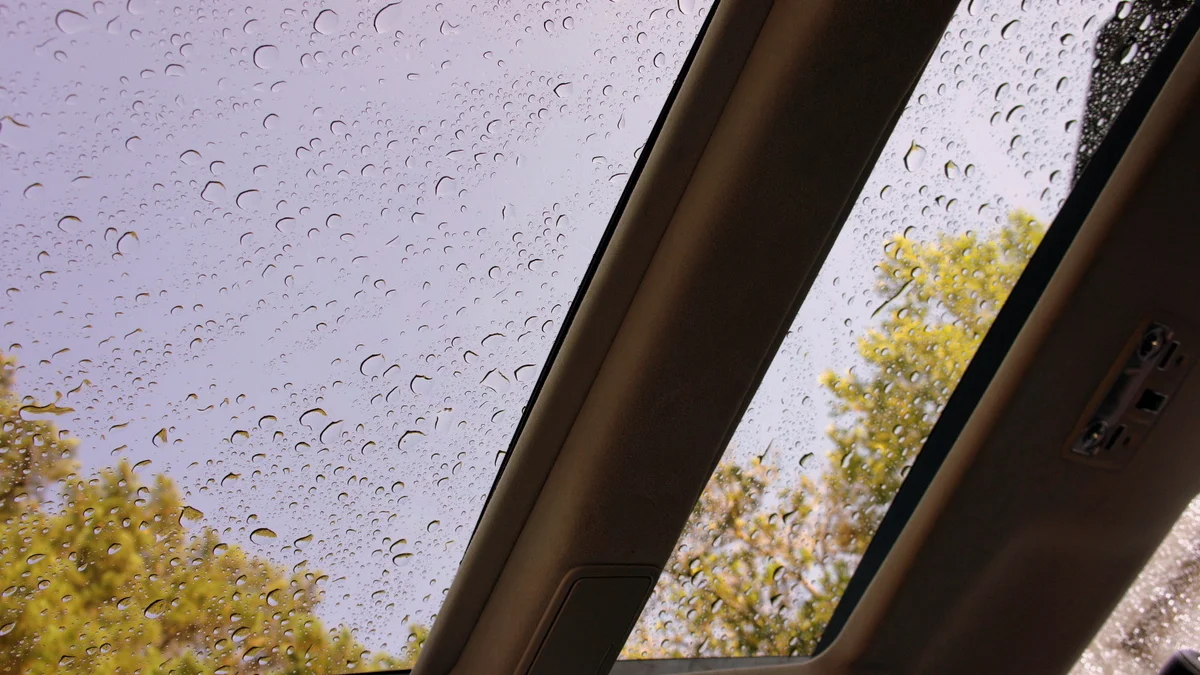
Brown water rings frequently appear along the edges of sunroof openings and A-pillar seams. These unsightly mineral stains occur when sunroof drain tubes become clogged with leaves, causing rainwater to back up and seep into the headliner substrate.
Before cleaning the stain, clear the sunroof drains using a flexible nylon line and compressed air. Once the leak is resolved, treat the mineral ring using a mild vinegar solution (one part distilled white vinegar to ten parts distilled water). The mild acidity dissolves alkaline mineral deposits without harming synthetic polyester fibers.
Always feather the edges of water stains outward into dry fabric to prevent creating a secondary drying ring. If you are also refreshing the rest of your cabin, check our detailed guides on how to clean cloth car seats and how to clean leather car seats to maintain matching upholstery cleanliness throughout the interior.
How Do You Clean Around Pillars and Grab Handles Safely?
The perimeter edges where the headliner meets windshield pillars, door weatherstripping, and side curtain airbag seams require extra caution. In modern vehicles, curtain airbags are tucked directly behind the roof liner edges.
When cleaning near A-pillar trim or B-pillar seat belt guides, do not insert metal pry tools or saturate seams where moisture could contact electrical wiring harnesses or airbag deployment squibs. Keep all detailing fluids strictly on the exterior surface of the microfiber towel. If you are dealing with stubborn odors embedded in your headliner foam, follow our protocol on how to get smell out of car interiors safely.
Mastering how to clean car headliner panels correctly preserves your interior color story, ensuring lighter headliner fabrics match clean seat upholstery in your daily driver.
When Should You Repair or Replace a Sagging Headliner?
If you encounter a ceiling where the fabric has already detached, attempting to clean sagging headliner cloth with liquid will accelerate total collapse.

Temporary fixes like push pins, upholstery twist tacks, or clear repair glue offer short-term relief, but permanent restoration requires removing the molded backing board, scraping away all rotted foam with a wire brush, and spraying high-temperature automotive headliner adhesive to bond fresh foam-backed fabric.
Take time to measure your roof board dimensions before ordering replacement fabric rolls to ensure adequate overhang for trimming around visor recesses and sunroof apertures.
Frequently Asked Questions
Can I use a steam cleaner on a car headliner?
No, you should never use a steam cleaner on a standard automotive headliner. The intense heat and high moisture break down the polyurethane foam backing and melt the heat-activated adhesive, causing the entire headliner fabric to detach and sag.
How do I remove bad smells from a headliner?
To eliminate odors like smoke or mildew from a headliner, use a dry foam fabric deodorizer or run an automotive ozone generator treatment inside the closed cabin. Avoid drenching the ceiling fabric with liquid aerosol sprays.
What is the best cloth to use for cleaning headliners?
The best cloth is a clean, edgeless, plush microfiber towel with a 70/30 polyester-polyamide blend and a density of 400 to 500 GSM. Microfiber lifts dirt through static charge and capillary action without requiring abrasive friction.
Why did my headliner sag after being cleaned?
Headliners sag after cleaning when too much liquid penetrates the thin face fabric and reaches the open-cell foam cushion beneath it. The moisture dissolves the glue bond and crumbles aged foam, detaching the fabric from the rigid backing board.