Anime Car Wrap: 3 Coverage Levels for Daily Drivers
Updated October 8, 2026
Quick fit: An anime car wrap offers three primary build options: full printed liveries ($5,000 to $8,500), partial half-wraps ($1,500 to $3,200), and die-cut spot decals ($150 to $600). For daily drivers, partial panel graphics balance visual impact with easy maintenance while keeping side vision glass compliant with federal safety codes.
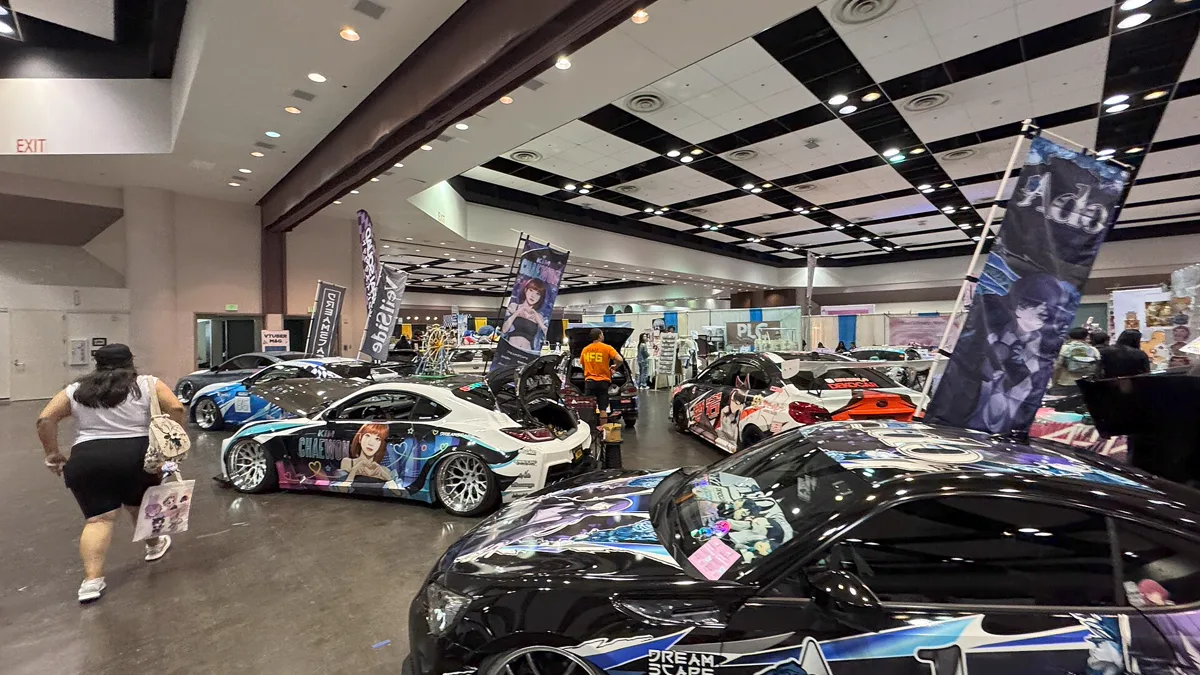
- Digital resolution standards: Raster character artwork requires a minimum of 150 to 300 DPI at full 1:1 physical print scale to prevent blurry pixels across large door panels.
- Laminate protection requirement: Printable cast vinyl must be paired with matched cast over-laminate (such as 3M 8518 or Avery DOL 1360Z) to shield printed inks from UV fading.
- Window glazing compliance: Solid vinyl must never obscure front windshields or driver-side windows; use 50/50 perforated one-way vision film on rear side glass only.
- Clear coat paint baseline: Vinyl wrap adheres to healthy factory clear coat; peeling clear coat or rust must be repaired prior to installation.
anime car wrap: comparing 3 build levels for your vehicle
Planning an anime car wrap involves choosing between three distinct execution formats based on your budget, daily driving environment, and tolerance for public attention. While full custom show liveries command the spotlight at conventions, partial wraps and spot decals offer accessible alternatives that protect your wallet and your commute.
Every automotive restyling project falls into one of three core design levels:
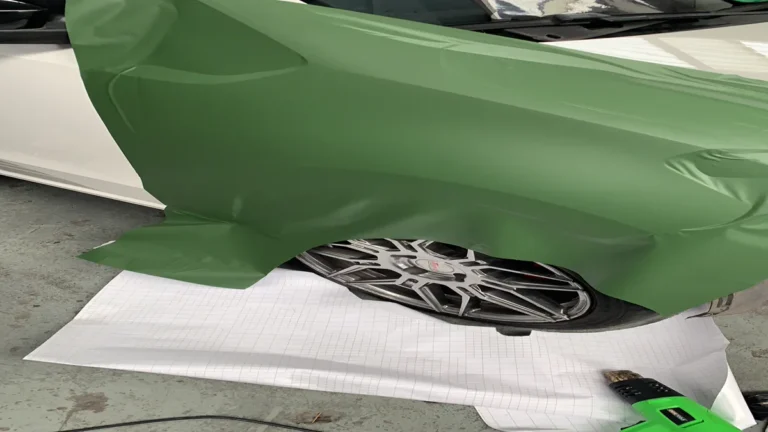
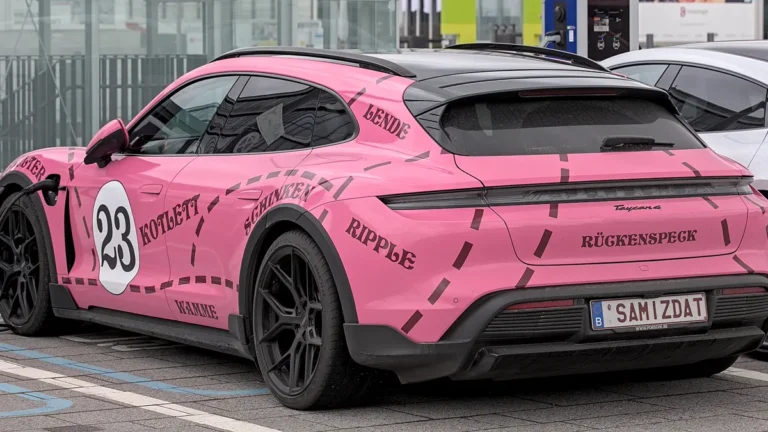
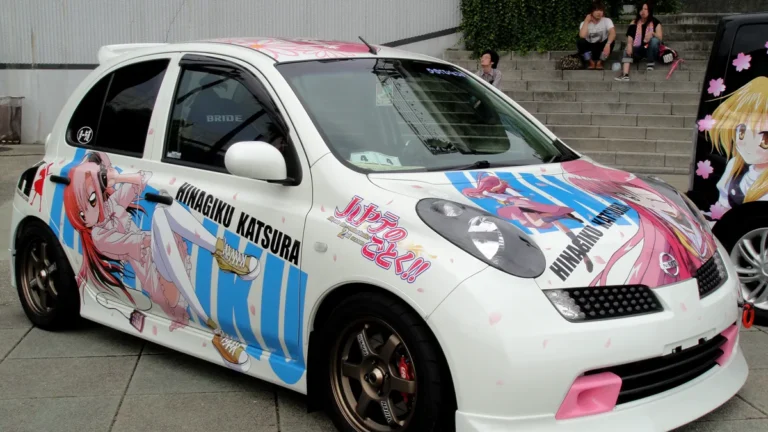
- Option 1: Full bespoke livery wrap ($5,000 to $8,500+): Every exterior body panel (from front bumper splitters to rear quarter panels and roof skins) is covered in custom-printed cast vinyl. The design mimics competitive motorsport liveries with geometric speed ribbons, faux sponsor logos, and character centerpieces. It requires full hardware teardown and up to 50 hours of specialized installation.
- Option 2: Partial half-wrap coverage ($1,500 to $3,200): Side doors, rear quarter panels, and the hood are wrapped, while the vehicle roof, front fascia, and pillars retain factory paint. By incorporating your vehicle factory color as the foundational color story, you cut material square footage in half while maintaining dramatic visual presence on the street.
- Option 3: Die-cut accent spot decals ($150 to $600): Individual contour-cut vinyl characters, slap stickers, and text decals applied strategically to clean door panels or rear quarter glass. This approach is 100% reversible in minutes and serves as the ideal testing ground for new builders.
To dive deeper into character selection and cultural history, consult our comprehensive itasha design build guide to discover how early enthusiasts balanced art with street tuning.
| Evaluation Criteria | Full Printed Livery | Partial Half-Wrap | Die-Cut Spot Decals |
|---|---|---|---|
| Typical Price Range | $5,000 to $8,500+ | $1,500 to $3,200 | $150 to $600 |
| Installation Downtime | 4 to 7 business days | 1 to 3 business days | 2 to 4 hours |
| Hardware Disassembly | Extensive (bumpers, lights, handles) | Moderate (handles, badges) | None required |
| Expected Lifespan | 3 to 5 years (cast media) | 3 to 5 years (cast media) | 2 to 4 years |
| Removal Complexity | Moderate heat peel (2 to 4 hours) | Simple heat peel (1 to 2 hours) | Fast peel (15 to 30 minutes) |
| Daily Driver Suitability | High profile / show focus | Balanced street presence | Understated enthusiast look |
How do full printed wraps compare to partial graphics in total cost?
The vast price difference between a full wrap and a partial graphic package comes down to digital design time, wide-format media costs, and teardown labor. Understanding where your dollars go ensures you receive a fair, itemized estimate from your chosen restyling shop.
Consider the primary cost components that shape final invoices:
- Digital illustration and blueprint layout ($400 to $1,200): Full wraps require an illustrator to position high-resolution character artwork over a 1:1 vector wireframe of your specific vehicle make, model, and trim. Door handle cutouts, fuel filler doors, and body character lines must be accounted for so focal art elements are not severed during installation.
- Wide-format printable cast media and laminate ($700 to $1,400): Unlike pre-colored solid vinyl rolls, printed wraps require two distinct layers: premium printable cast vinyl (such as Avery MPI 1105 or 3M IJ180mC) and a protective UV cast over-laminate (such as 3M 8518 gloss or DOL 1360Z). The laminate seals the ink pigments against rain, car wash soap, and sun bleaching.
- Hardware teardown and cleaning labor ($800 to $2,000): Partial wraps save considerable labor because technicians do not need to drop front bumpers or remove complicated headlight assemblies. Wrapping only side doors and quarter panels cuts teardown hours by more than half.
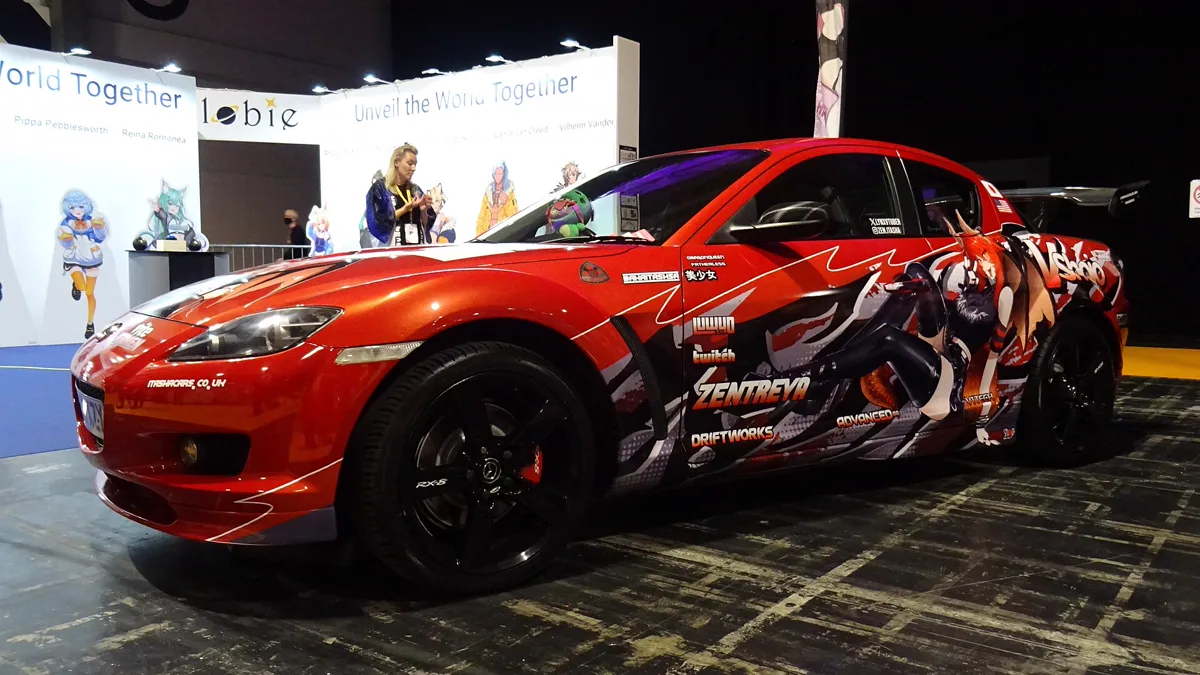
What digital artwork resolution is required for vehicle panels?
The most devastating mistake rookie builders make is supplying low-resolution mobile wallpapers or compressed internet images to a print shop. When an image designed for a 6-inch phone screen is blown up across a 10-foot vehicle door, every tiny compression artifact becomes a jagged, blurry mess.
To achieve razor-sharp printed graphics on physical sheet metal, adhere to these technical artwork rules:
- Full 1:1 scale at 150 to 300 DPI: Professional wide-format printers output at 720 to 1440 DPI. For large vehicle panels, your design canvas should measure at full physical dimensions at 150 DPI minimum, or half-scale at 300 DPI.
- Vector graphics for sponsor ribbons and geometric shapes: Background speed lines, kanji typography, and logo shapes should always be created in vector formats (.AI, .EPS, or .SVG). Vector assets can be scaled infinitely without losing edge crispness.
- Independent digital artist commissions: Sourcing high-resolution artwork directly from talented freelance illustrators ensures your character artwork is clean, layered, and formatted with transparent alpha channels. Commissioning custom art also respects creative rights within the broader anime and gaming subculture.
For additional layout advice and measuring guidelines across body panels, explore our itasha design tutorials to verify panel dimensions before placing print orders.
What are the legal rules for perforated window film on street cars?
Extending character artwork across side and rear window glass creates seamless visual flow, but street compliance requires using the correct materials. Covering automotive glass with opaque solid vinyl is strictly illegal in all fifty states and severely compromises driver visibility.
Keep your daily build fully street legal by following these window glazing rules:
- Use 50/50 or 60/40 perforated one-way film: Perforated vinyl features micro-punctures across 50% or 40% of its surface area. From the exterior, sunlight reflects off the printed surface to reveal brilliant color; from the interior, human eyes focus past the tiny dark holes, providing clear outward vision.
- Apply optically clear cast laminate: Rainwater pooling in micro-perforations acts like tiny magnifying lenses that distort rearward vision. A specialized optically clear cast laminate seals the outer holes while preserving light transmission.
- Never apply film forward of the B-pillar: Front windshields and front driver and passenger side windows must remain unobstructed. Vehicle safety codes strictly prohibit non-transparent decorative graphics on front glass.
Check your state: Window glazing transparency standards are federally regulated under federal motor vehicle safety standard 205 (FMVSS 205), with specific visual light transmission limits enforced by state transportation codes. Always check your state department of transportation rules before covering any vehicle glass.
How easily can you remove printed anime vinyl without clear coat damage?
A properly installed cast vinyl wrap provides an exceptional temporary customization method that protects your vehicle original paint from light rock chips and minor sun exposure. However, clean removability depends entirely on material quality and timely removal.
Follow these essential removal guidelines to protect your clear coat:
- Strip the wrap within the manufacturer warranty window: Premium cast films are rated for clean, residue-free removal within 3 to 5 years. Do not leave vinyl on a daily driver past its service life, as dried adhesive cross-links with clear coat.
- Use controlled radiant heat during peel: Warm the film with a heat gun or commercial steamer to approximately 120°F to 140°F (50°C to 60°C). Softened vinyl pulls off smoothly at a shallow 45-degree angle without leaving heavy glue residue.
- Use citrus-based adhesive removers: Any residual glue tack should be dissolved with citrus adhesive removers and wiped clean with plush microfiber towels. Never scrape automotive paint with steel razor blades.
What it means for your build and choosing your coverage level
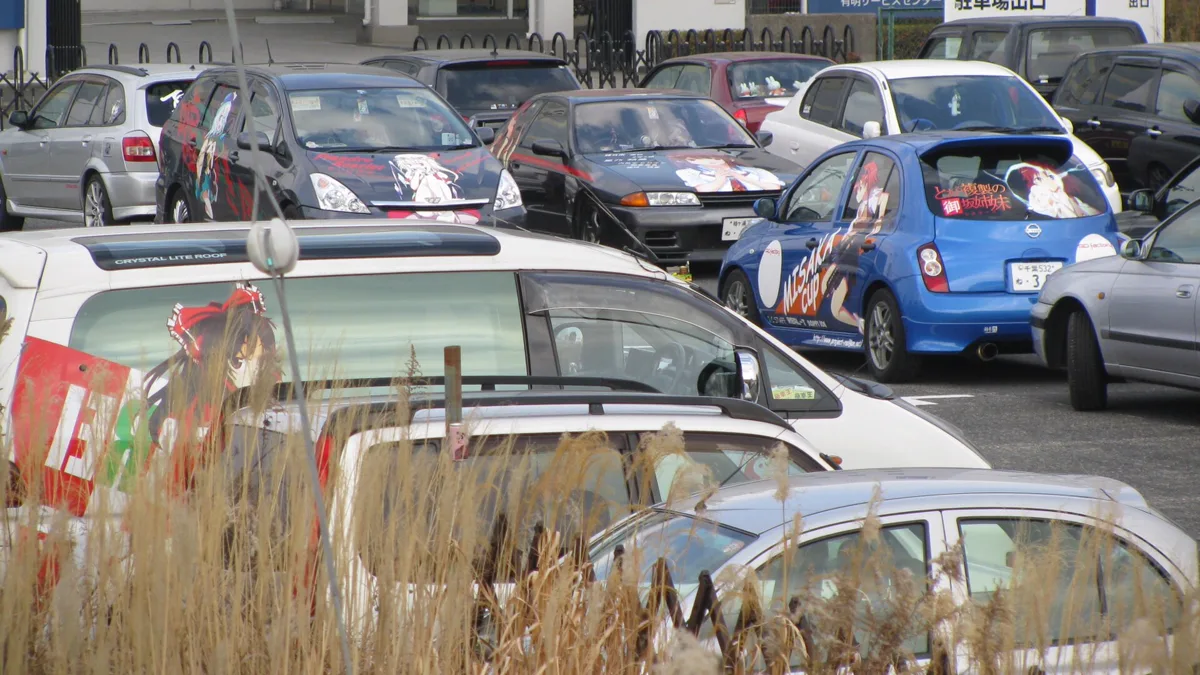
Choosing the right coverage tier for your project comes down to your long-term goals as a car owner. If your vehicle is a weekend show car, a full printed livery delivers unforgettable presence. If your car is a dedicated daily driver that commutes to work and parks outside, a partial wrap offers the smartest balance of style, cost, and practicality.
Keep these four final recommendations in mind:
- Start with a measured partial build: You can always begin with side door panels and a matching hood graphic, adding roof or bumper accents later as your budget allows.
- Choose a cohesive color story: Select character illustration tones that harmonize with your vehicle paint, brake calipers, and interior stitching.
- Verify your print shop materials: Insist on genuine cast printable vinyl with matched cast laminate in writing before work begins.
- Protect your investment with hand care: Wash your wrapped vehicle every two weeks using two buckets and pH-neutral soap, and park in shaded spaces whenever possible.
garage questions
Can an anime wrap damage original factory clear coat?
No, high-grade cast vinyl protects factory clear coat from minor surface scratches and sun fading. When peeled within the manufacturer recommended lifespan of 3 to 5 years using gentle heat, the film leaves underlying paint in original condition.
Can you drive an anime wrapped car through an automatic car wash?
You should avoid mechanical car washes with spinning abrasive brushes. The bristles can catch vinyl seams, lift delicate corner edges, and leave micro-scratches across printed gloss laminate. Two-bucket hand washing remains the safest method.
How long does it take to print and install a full anime car wrap?
A full custom wrap generally requires 2 to 3 weeks for digital artwork layout and revisions, followed by 3 to 5 business days of physical shop downtime for vehicle teardown, surface prep, printing, laminating, and installation.
Is it legal to put anime graphics over rear car windows?
Yes, provided you use 50/50 or 60/40 perforated one-way vision film that allows the driver to see outward clearly. Solid vinyl is illegal on vision glass, and front side windows must remain unobstructed under vehicle safety codes.
How we researched this: Guide formulated through commercial vehicle restyling data, digital illustration scale requirements, and federal glazing safety regulations as of October 2026.
Sources: 3M Commercial Graphics Application Standards, Avery Dennison Digital Print Care Guide, SEMA Restyling Specifications, and Federal Motor Vehicle Safety Standard 205.