How Long Does a Car Wrap Last? 4 Lifespan Factors Explained
Updated October 5, 2026
Quick fit: Exploring how long does a car wrap last: a professional cast vinyl wrap lasts 3 to 5 years on a daily driver. Vertical door panels easily reach 5 years, while horizontal hoods and roofs endure heavy UV degradation around year 3. Regular two-bucket hand washing and dedicated ceramic sealants maximize lifespan.
- Cast vs calendered vinyl: Premium cast vinyl expands and contracts with ambient temperature swings, whereas cheaper calendered film shrinks and curls within 12 to 18 months.
- Horizontal UV exposure: Flat horizontal surfaces (hood, roof, trunk lid) receive four times the solar UV radiation compared to vertical doors and fenders.
- Washing frequency requirements: Daily drivers parked outside require bi-weekly hand washes with pH-neutral soap to prevent bug splatter and acid rain etching into the vinyl pores.
- Safe removal timeline: Stripping vinyl film within 3 to 4 years takes roughly two hours with heat, whereas letting baked vinyl crack requires expensive scraping and solvents.
how long does a car wrap last across cast and calendered vinyl films?
The single most decisive factor determining how long does a car wrap last is the underlying manufacturing chemistry of the polyvinyl chloride (PVC) film. While marketing materials frequently quote broad 5-year to 7-year life expectancies, real-world longevity depends on whether your installer applied premium dual-cast vinyl or economical calendered film.
Here is how the two primary vinyl film constructions behave on a vehicle exterior:
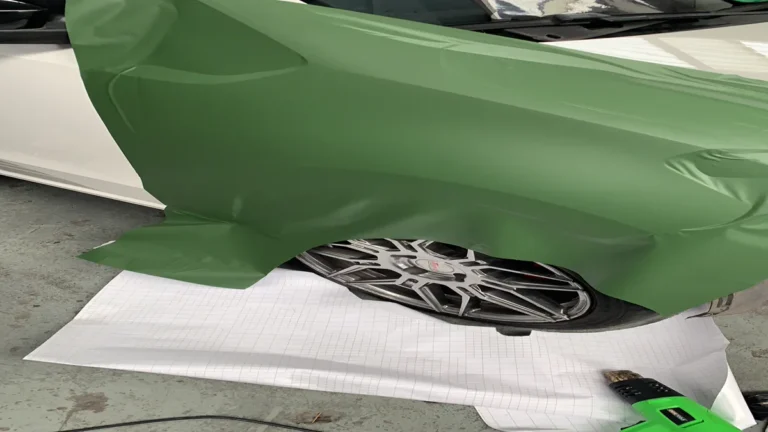
- Cast vinyl film (3 to 5+ years of real lifespan): Cast vinyl begins as a liquid resin poured into a thin sheet before curing. Because the film has never been mechanically stretched into shape, it possesses virtually zero molecular memory. When stretched over complex compound curves, recessed door handle cups, and deep bumper channels, cast film remains dimensionally stable and will not pull back from seams.
- Calendered vinyl film (1 to 2 years of limited lifespan): Calendered vinyl is produced by heating PVC plastic and forcing it through heavy industrial rollers like dough. While budget-friendly, the film retains physical tension. Over months of exposure to engine heat and outdoor sun, the plasticizers evaporate, causing calendered vinyl to shrink, pull away from panel edges, and leave sticky exposed adhesive rings.
When planning your project budget, reviewing our full car wrap pricing breakdown illustrates why spending an extra $400 on professional cast materials saves thousands of dollars in premature replacement labor.
| Film Grade and Application | Garaged Daily Driver | Outdoor Northern Climate | Outdoor Sunbelt Climate |
|---|---|---|---|
| Premium Cast (Vertical Panels) | 5 to 7 years | 4 to 5 years | 3 to 4 years |
| Premium Cast (Horizontal Roof / Hood) | 4 to 5 years | 3 to 4 years | 2 to 3 years |
| Calendered Film (All Panels) | 2 to 3 years | 1 to 2 years | 9 to 14 months |
| Specialty Metallic / Chrome / Textured | 3 to 4 years | 2 to 3 years | 18 to 24 months |
Why do horizontal panels degrade faster than vertical doors?
Every vehicle installer recognizes the horizontal degradation rule: hoods, roof skins, and trunk decklids endure four times the environmental punishment of vertical door skins and quarter panels. Understanding this disparity prevents unpleasant surprises as your wrap enters its third year of service.
Three primary mechanical factors accelerate horizontal panel aging:
- Direct ultraviolet (UV) angle of incidence: Solar radiation hits horizontal body metal at a near-perpendicular 90-degree angle during peak midday hours. Ultraviolet wavelengths break down the protective top laminate coating, oxidizing pigments and causing matte or satin finishes to turn chalky.
- Internal radiant engine heat: The vehicle hood absorbs severe heat from underneath while baking in overhead sunlight. Under-hood engine bay temperatures frequently exceed 180°F (82°C) in slow commuter traffic, effectively cooking the vinyl adhesive from both sides simultaneously.
- Contaminant pooling: Acid rain, industrial fallout, sprinkler water deposits, and bird droppings pool naturally on flat horizontal metal rather than running off like they do on vertical doors. As water evaporates in the sun, concentrated acidic mineral deposits etch deep into the vinyl surface.
How to wash a wrapped car without lifting edges or swirling gloss?
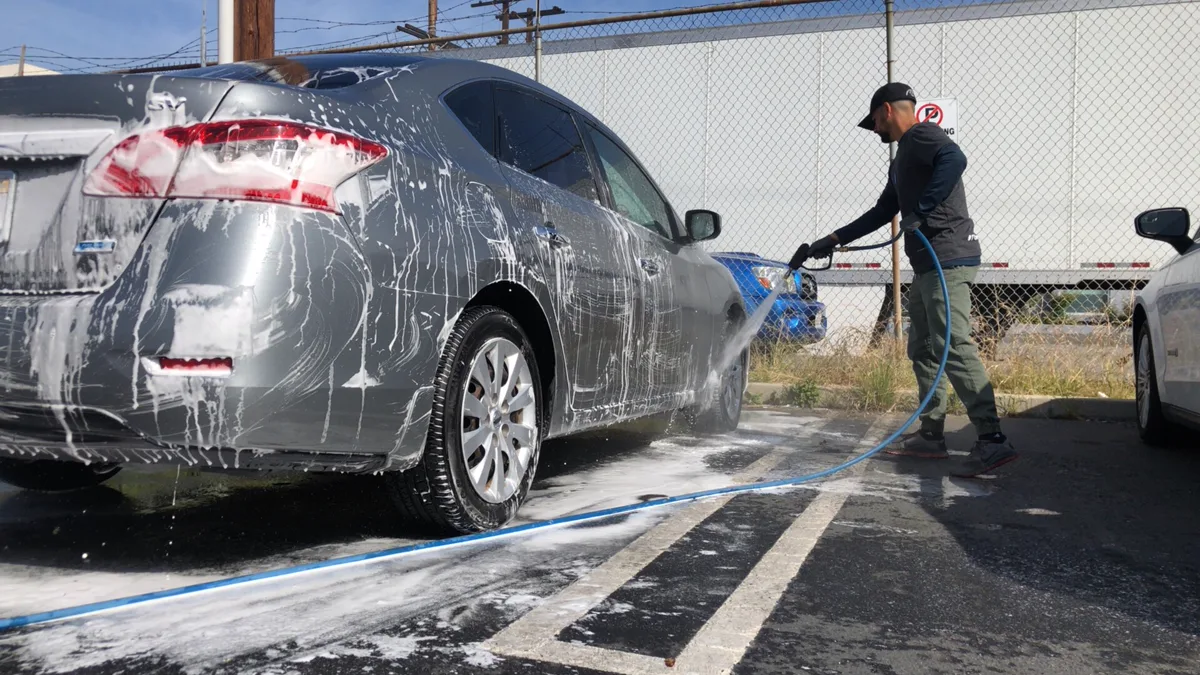
Mastering how to wash a wrapped car is the most impactful maintenance habit you can adopt to protect your exterior investment. Automated drive-thru car washes with spinning abrasive brushes are the leading cause of premature edge lifting, surface gouges, and dull finishes.
Follow this proven five-step two-bucket washing routine every two weeks:
- Perform a gentle pre-rinse: Rinse the car thoroughly with cool water to float away loose grit before touching the vinyl. If using a pressure washer, keep the water pressure below 1,800 PSI, use a wide 40-degree spray tip, and never hold the nozzle closer than 14 inches from body panel edges.
- Use pH-neutral automotive shampoo: Choose a gentle automotive wash soap free from harsh petroleum solvents, aggressive degreasers, or carnauba waxes that can cloud matte or satin vinyl finishes.
- Adopt the two-bucket contact wash: Fill one bucket with soapy wash water and a second bucket with clean rinse water fitted with a grit guard. Wash one body panel at a time using a plush microfiber mitt, rinsing the mitt in clean water after every pass.
- Spot-treat organic contaminants immediately: Remove bird droppings, tree sap, and road tar the same day they land. Saturate the spot with warm soapy water or dedicated vinyl surface cleaner for three minutes to soften the residue before gently wiping it away without hard rubbing.
- Dry with plush microfiber towels: Never allow water to air-dry on wrapped panels in direct sunlight. Blot or glide large, clean microfiber drying towels across the surface to prevent mineral water spotting.
For more maintenance guides and styling tips across all exterior modifications, explore our wraps and decals guides to keep your custom project looking clean through every season.
Can ceramic coating extend vehicle wrap lifespan on outdoor cars?
Applying a specialized ceramic coating vinyl wrap formula is one of the most effective ways to preserve exterior film on vehicles parked outside. Traditional paint ceramics cure into rigid glass structures that can crack flexible vinyl, but dedicated wrap coatings bond as flexible silica barriers.
Installing a vinyl-safe ceramic coating provides three distinct longevity benefits:
- Enhanced ultraviolet resistance: High-grade ceramic formulas contain specialized UV blocking agents that filter harsh solar rays, shielding the vinyl pigments from premature bleaching and clear laminate failure on horizontal panels.
- Hydrophobic self-cleaning properties: The slick surface repels water, road oil, and dirt. Rain showers rinse away surface dust naturally, reducing friction during contact hand washes and eliminating wash swirls.
- Stain prevention barrier: Porous matte and satin films readily absorb oily diesel soot and acidic tree sap. Ceramic coating fills microscopic vinyl valleys, preventing foreign contaminants from bonding permanently to the film.
What are the critical warning signs that your wrap needs removal?
One of the costliest errors car owners make is leaving vinyl on their vehicle until it deteriorates completely. Fresh 3-year cast vinyl peels off smoothly in large sheets with gentle heat. Waiting until the film fails turns removal into a grueling 15-hour scraping ordeal that risks clear coat damage.
Watch for these four telltale warning signs indicating it is time to remove or replace your film:
- Chalking or loss of surface sheen: When satin film looks dusty and textured even after washing, the protective UV inhibitor layer has fully dissipated.
- Panel edge shrinkage: If the vinyl pulls back from door seams, headlights, or window moldings, revealing 2 to 3 millimeters of factory paint, the vinyl plasticizers have dried out.
- Surface discoloration and staining: Permanent dark streaks or yellowish discoloration that cannot be lifted with mild soap indicate the adhesive underneath has begun breaking down.
- Micro-cracking (the alligator skin stage): If you observe tiny web-like fissures forming on the hood or roof, the vinyl is at catastrophic failure. Remove the film immediately before the adhesive bakes into the clear coat and requires aggressive plastic razor scraping.
Check your state: When maintaining or replacing automotive vinyl, always dispose of old film and chemical solvents responsibly. Consult official vehicle graphics technical bulletins and local municipal environmental regulations for recommended waste handling procedures.
What it means for your build and long term care
Treating vehicle vinyl as a temporary, protective cosmetic enhancement rather than permanent armor ensures you enjoy your custom build without costly headaches down the road.
Integrate these four builder habits into your ownership routine:
- Plan for a 3-year horizontal review: Mark your calendar 36 months from install date to evaluate your hood and roof panels. Re-wrapping just the horizontal surfaces costs a fraction of a full wrap and keeps the entire vehicle looking uniform.
- Keep a dedicated wash kit in your trunk: A bottle of quick detailer and plush microfibers allows you to wipe bird droppings or tree sap within minutes before heat bakes them in.
- Seek shade during peak hours: Parking in covered garages, carports, or shaded spots during hot afternoon hours cuts cumulative UV exposure in half.
- Budget for timely removal: Set aside removal funds ($300 to $500) so you never delay stripping aged film when warning signs appear.
garage questions
Can I pressure wash a wrapped vehicle safely?
Yes, pressure washing is safe if you maintain proper precautions. Keep water pressure below 1,800 PSI, use a wide 40-degree spray tip, stay at least 14 inches away from panels, and avoid spraying directly at seams or edges where water can force the film to lift.
Can you wax a wrapped car with traditional carnauba wax?
No, you should never use traditional carnauba paste wax or solvent-based polishes on vinyl wraps. These products leave cloudy white residue along seams and can permanently alter the finish of satin or matte films. Use only spray sealants formulated specifically for vinyl.
What happens if you leave a vinyl wrap on too long?
Leaving vinyl wrap on for 6 to 8 years causes the film to become brittle and crack. The adhesive cross-links with the clear coat beneath, making clean peeling impossible. Removal then requires intensive plastic scraping and chemical solvents that can damage original paint.
Does sunlight and climate affect how long a wrap lasts?
Yes, climate is the largest external variable. Vehicles in hot, high-sun states like Arizona, Texas, and Florida experience horizontal wrap degradation in 2 to 3 years, while cars garaged in northern climates frequently maintain pristine wrap condition for 5 or more years.
How we researched this: Guide formulated from 3M and Avery Dennison technical service bulletins, professional detailing logs, and verified multi-year outdoor vehicle exposure data as of October 2026.
Sources: 3M Automotive Wrap Technical Care Standards, Avery Dennison Supreme Wrapping Film Maintenance Manual, and International Detailing Association (IDA) Best Practices.