What Does JDM Mean? 5 Core Differences for Car Enthusiasts
Updated October 4, 2026
Quick fit: Exploring what does jdm mean: JDM stands literally for Japanese Domestic Market, designating vehicles and components manufactured strictly to Japanese vehicular regulations. Beyond legal definitions, car enthusiasts embrace JDM culture through driver-focused cockpit ergonomics, clean color stories, and functional motorsport-inspired styling.
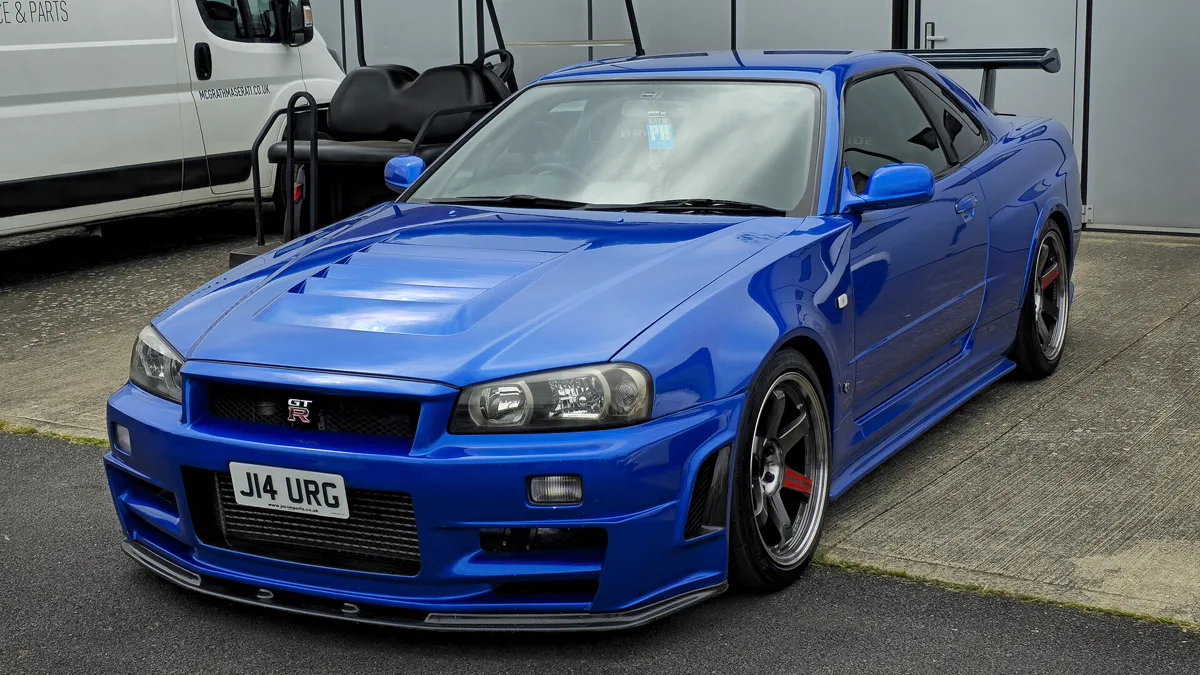
- Literal vs cultural distinction: True JDM refers only to cars originally sold for use within Japan, while JDM-style describes aftermarket tuning inspired by Japanese trends.
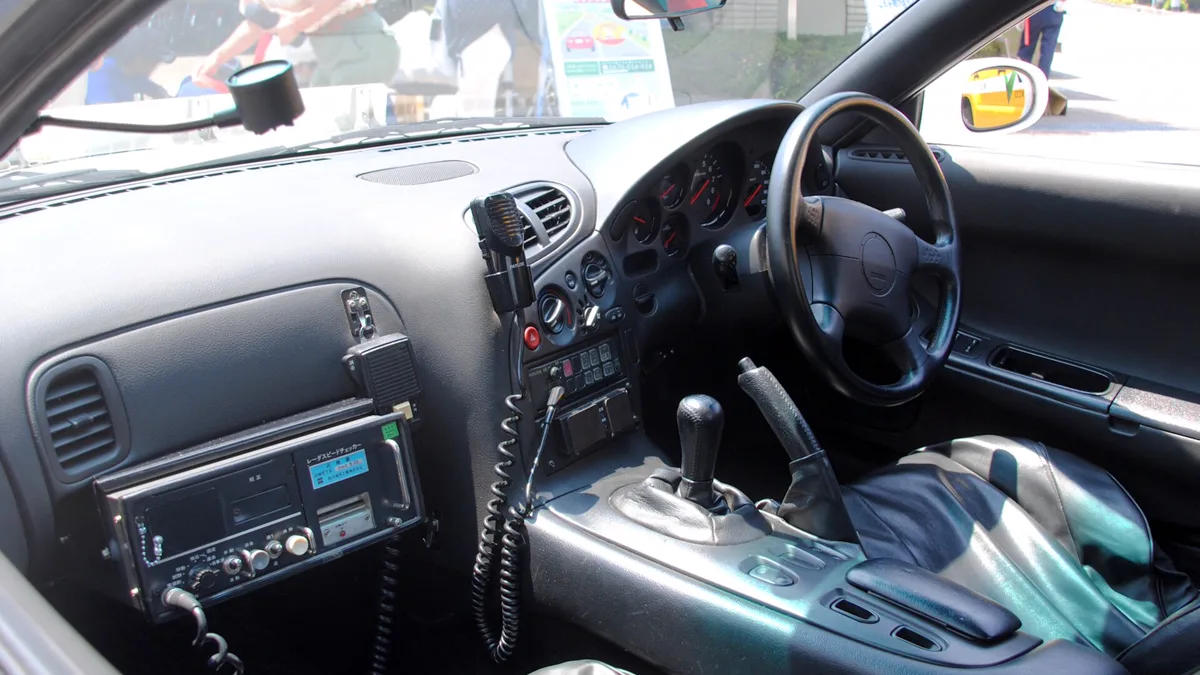
- Right-hand drive ergonomics: Authentic Japanese market imports feature right-hand drive (RHD) layouts, requiring adjusted driver visibility at left-hand intersections.
- Factory equipment differences: Japanese market specifications often include unique amber lighting, folding electronic mirrors, integrated road flare clips, and 180 km/h speed limiters.
- Federal 25-year import rule: The United States allows non-conforming foreign vehicles to enter legally once they reach exactly 25 years from their month of manufacture.
what does jdm mean: literal definition and origins
The acronym JDM stands strictly for Japanese Domestic Market. In formal automotive industry terminology, it refers exclusively to vehicles, factory accessories, replacement components, and mechanical assemblies designed, homologated, and sold for use within Japan under domestic road transport laws.
To understand why this distinction matters to modern car enthusiasts, consider how global automakers engineer vehicles for different world markets:
- Regulatory tailoring: Japanese motor vehicle safety and emissions standards (enforced through rigorous shaken inspections) differ from European UN-ECE regulations and United States Federal Motor Vehicle Safety Standards (FMVSS).
- Domestic chassis design: Japanese domestic models are manufactured exclusively with right-hand drive (RHD) cockpits and calibrated for compact urban environments, narrow mountain passes, and dense expressway networks.
- Cultural misapplication: Enthusiasts frequently refer to any Japanese-brand vehicle as JDM. However, a Toyota Camry manufactured in Kentucky or an Acura Integra assembled in Ohio is technically a USDM (United States Domestic Market) vehicle, despite bearing a Japanese marque badge.
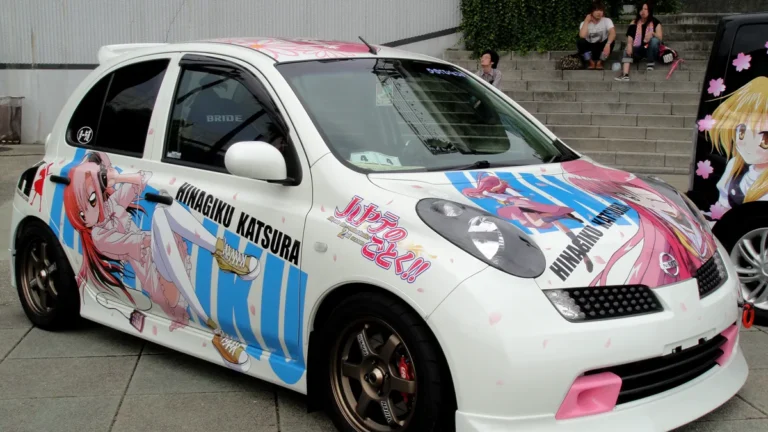
When builders seek to merge Japanese pop culture with vehicle aesthetics, some take this philosophy to its visual extreme by building an authentic itasha wrap, where exterior sheet metal becomes a dedicated showcase for anime and gaming illustrations.
How do authentic Japanese models differ from export versions?
During the golden era of Japanese sports cars from the late 1980s through the early 2000s, domestic Japanese market vehicles routinely received superior engine specifications, lighter body shells, tighter gear ratios, and advanced interior electronics that never reached overseas export showrooms.
Key technical differences that distinguish genuine Japanese market vehicles from foreign counterparts include:
- Electronic speed limiters: Japanese automotive manufacturing agreements mandated that all domestic market vehicles limit forward speed to 180 km/h (112 mph) from the factory, regardless of horsepower.
- The 280-horsepower gentleman agreement: Until 2004, Japanese carmakers adhered to an informal domestic agreement capping advertised engine power at 276 to 280 horsepower (206 kW) to discourage street racing, even when twin-turbo powerplants were capable of far more.
- Lighting and exterior lenses: Japanese domestic cars were equipped with amber side indicators, distinct front bumper parking pole options, integrated yellow fog lights, and aerodynamically shaped power-folding side mirrors well before export models adopted them.
- Factory safety accessories: Japanese safety codes required passenger footwells to house a red emergency road flare mounted in a factory molded clip under the glove box.
| Vehicle Component | Japanese Domestic Market (JDM) | United States Export (USDM) |
|---|---|---|
| Steering Position | Right-hand drive (RHD) standard | Left-hand drive (LHD) mandatory |
| Speedometer Display | Metric km/h (governed at 180 km/h) | Miles per hour (mph) with dual scaling |
| Front Bumper Beam | Compact crash structure for tight parking | Reinforced 5-mph bumper absorbers |
| Side Mirrors | Power-folding convex glass mirrors | Fixed or manual fold flat glass |
| Headlight Beam Cutoff | RHD kick-up pattern (left-side bias) | LHD kick-up pattern (right-side bias) |
What defines an authentic JDM interior aesthetic for your daily driver?
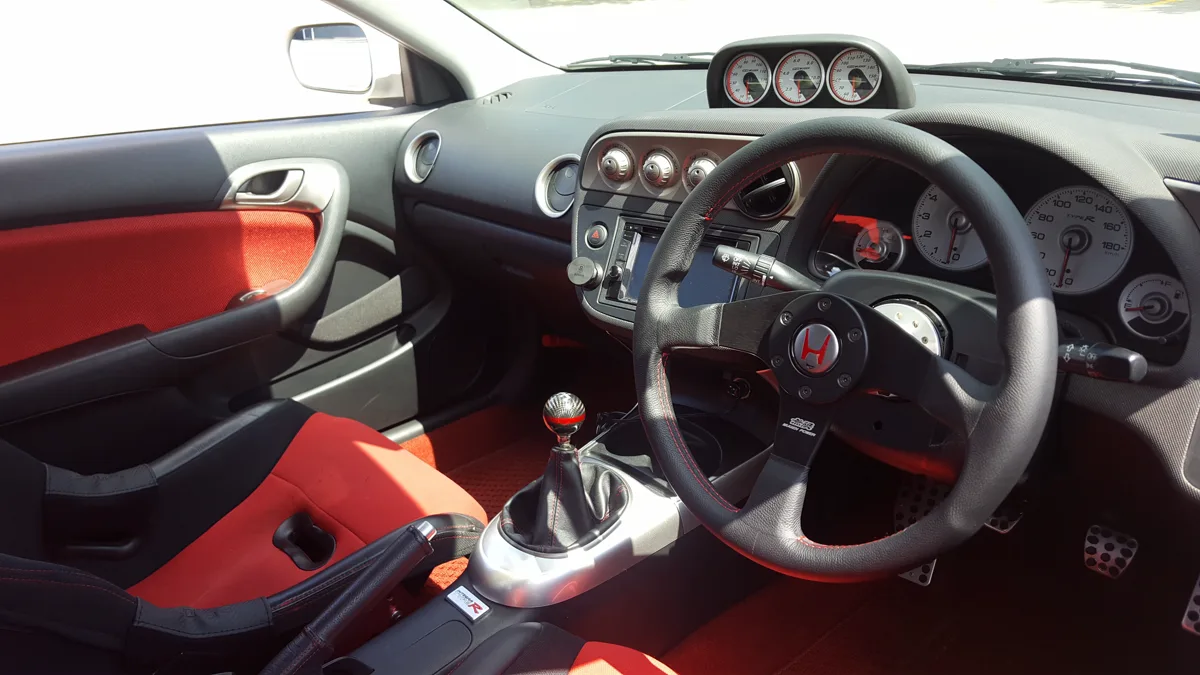
In modern automotive restyling, creating an authentic jdm interior does not require a complete right-hand drive vehicle conversion. Instead, true Japanese tuning philosophy focuses on functional driver engagement, tactile control surfaces, supportive seating, and a clean, clutter-free cockpit environment.
You can capture this authentic spirit in your daily driver through five thoughtful upgrades:
- Bolstered fabric seating: Japanese performance models prioritized grippy, breathable fabric over slippery leather. Sourcing bolstered bucket seats or period-correct gradient cloth inserts provides superior lateral support during spirited cornering while remaining comfortable in summer heat.
- Weighted tactile shift knobs: Replacing factory plastic shifters with precision-machined stainless steel, Delrin, or titanium weighted shift knobs (typically weighing between 400 and 500 grams) dramatically smooths manual gear shifts and provides positive mechanical feedback.
- Restrained color stories: Classic Japanese cockpits rely on a deliberate palette. A dominant dark graphite or satin black interior accented with subtle red stitching, brushed aluminum pedals, and clean checkered floor mats creates a cohesive, track-ready aesthetic without looking chaotic.
- Sports steering wheel ergonomics: Sourcing a leather-wrapped or suede-trimmed sports wheel with a centered yellow or red top alignment stripe delivers immediate tactile improvement over bulky commuter wheels.
- Period-correct electronic gauge integration: Rather than mounting excessive gauges across the windshield, Japanese tuners integrate oil pressure, boost, and water temperature readouts cleanly into single-DIN center console slots or custom A-pillar pods.
Discover more technical cockpit planning guides and fabric selection advice across our JDM interior design hub, where we detail how to measure floor pans, select durable materials, and maintain driver focus.
How did Japanese car culture evolve into a worldwide tuning movement?
What began as grassroots illegal street racing along Tokyo’s Shuto Expressway (the legendary Mid Night Club and Kanjozoku racers of Osaka) gradually evolved into a worldwide cultural movement that redefined how modern enthusiasts customize sports cars.
Several cultural forces accelerated this global shift:
- Drift culture and motorsport origins: Drivers like Keiichi Tsuchiya (the Drift King) demonstrated that vehicle balance, throttle control, and agile chassis dynamics delivered greater driving thrills than raw straight-line horsepower.
- Anime and automotive media: Franchise releases like Initial D and Wangan Midnight introduced millions of international fans to iconic chassis codes such as the AE86 Trueno, FD3S RX-7, and BNR32 Skyline GT-R.
- Aftermarket engineering pedigree: Tuning houses like HKS, Mugen, Spoon Sports, Nismo, Tomei, and GReddy engineered motorsport-grade parts that set benchmark standards for durability, fitment precision, and high-rpm reliability.
What are the legal rules to import a true Japanese vehicle?
Owning an authentic Japanese-market vehicle in North America requires navigating strict federal transportation statutes. Vehicles that were not originally manufactured to comply with United States safety standards cannot be legally registered for highway use until they reach antique vehicle exemption thresholds.
Enthusiasts must understand three core legal frameworks:
- The NHTSA 25-Year Rule: Under United States Code title 49 section 30112, any foreign motor vehicle that is at least 25 years old from its exact month of manufacture is completely exempt from Federal Motor Vehicle Safety Standards (FMVSS). This federal statute allows enthusiasts to import icons like the Nissan Silvia S15 or R34 Skyline once they celebrate their 25th birthday.
- EPA 21-Year Clean Air Exemption: The Environmental Protection Agency exempts passenger vehicles from federal emissions compliance once the chassis and original-type engine configuration reach 21 years of age.
- State-level registration hurdles: Federal legal importation does not automatically grant immediate state street registration. States with rigorous environmental mandates, notably California, require imported grey-market vehicles to undergo expensive California Air Resources Board (CARB) testing and tailpipe modifications before issuing license plates.
Check your state: Before purchasing an imported right-hand drive vehicle or grey-market chassis, verify federal compliance via official federal vehicle importation standards and consult your state department of motor vehicles regarding local title and safety inspection requirements.
What it means for your build and styling choices
Ultimately, what does jdm mean to the practical builder comes down to intent and respect for engineering heritage. You do not need an imported right-hand drive chassis in your driveway to appreciate Japanese automotive culture.
Follow these four practical builder rules for your own project:
- Focus on driver ergonomics first: Prioritize upgrades that touch your hands and body (steering wheel grip, supportive seat bolstering, and solid shifter bushings) over cosmetic trinkets.
- Keep your color story disciplined: Select two primary interior tones and stick to them across your shift boot, seats, and floor mats to maintain clean factory-plus refinement.
- Choose functional modifications: Install suspension, braking, and cooling components that improve daily road handling rather than slammed ride heights that compromise drivability.
- Honor the subculture honestly: Celebrate your vehicle for what it is. A cleanly modified domestic coupe with period-inspired Japanese accessories commands respect because it demonstrates craftsmanship, patience, and attention to detail.
garage questions
Is a Japanese car made in America considered JDM?
No, a Japanese-brand vehicle assembled in North America for the local market is classified as USDM (United States Domestic Market). JDM refers strictly to vehicles engineered, manufactured, and sold for use within Japan under domestic regulations.
Is it legal to drive a right-hand drive JDM car in the United States?
Yes, driving a right-hand drive vehicle is completely legal on public United States roads, provided the vehicle was imported legally under the federal 25-year NHTSA exemption rule and meets state registration requirements.
Why do Japanese domestic market cars have a 180 km/h speed limiter?
During the late 1970s and 1980s, the Japan Automobile Manufacturers Association established self-imposed limits to improve road safety, capping factory vehicle speedometers and engine computers at 180 km/h (approximately 112 mph).
What does JDM style mean compared to real JDM?
Real JDM refers to genuine vehicles and parts sourced from the Japanese market. JDM style describes modifying a domestic vehicle using styling philosophies, accessories, and aesthetic choices inspired by Japanese car culture.
How we researched this: Guide developed through Japanese vehicle manufacturing technical bulletins, federal import regulations, and direct builder documentation as of October 2026.
Sources: NHTSA Importation Handbook, Japanese Ministry of Land, Infrastructure, Transport and Tourism (MLIT) Vehicle Standards, and SEMA Automotive Heritage Archives.