Anime Car Decals: 5 Placement Rules for Daily Drivers
Updated October 14, 2026
Quick fit: Styling with anime car decals requires choosing cast vinyl over calendered film, sizing graphics proportionally to body lines, and keeping vision glass unobstructed. Placing peekers on rear quarter glass and door panels protects clear coat while keeping daily commutes 100% street legal under state vehicle codes.

- Vinyl film grade: Insist on cast PVC film or premium outdoor vinyl rated for 5 to 7 years; cheap promotional stickers shrink, crack, and bake into clear coat within months.
- Laminate protection: Ensure printed character art features a matched UV-blocking clear over-laminate to prevent printed inks from fading under intense sun exposure.
- Glass placement boundaries: Never place opaque vinyl stickers across front windshields or driver-side roll-down glass; reserve spot decals for fixed rear quarter windows.
- Panel seam margins: Leave at least two inches of clear space between sticker borders and panel edges, door handles, or rubber window gaskets.
what vinyl material should you choose for exterior car decals?
Adding character graphics to an automobile is one of the most accessible ways to express your personal interests on the road. However, not all adhesive graphics perform equally when exposed to highway speeds, road grit, automatic car washes, and harsh summer sunlight. Understanding material construction is the first step toward building a clean exterior aesthetic.
Quality vinyl matters. Automotive vinyl graphics fall into three primary manufacturing categories:
- Cast vinyl film (2 mil thickness): Manufactured by pouring liquid synthetic resin onto a moving casting sheet. Cast film has no physical memory, meaning it will never shrink or pull back from edges when applied across compound curves. Premium cast vinyl features outdoor durability of 5 to 8 years.
- Calendered vinyl film (3 to 4 mil thickness): Created by squeezing heated PVC paste through heavy rollers. While economical, calendered vinyl retains internal stress. Under seasonal heat cycles, it gradually shrinks, leaving a sticky dirt ring around the sticker perimeter within two years.
- Laminated printed decals: High-resolution digital artwork printed onto white vinyl base material, then sealed under a protective clear gloss or matte over-laminate film. The laminate shields organic inks from ultraviolet degradation and fuel spill staining.
Choose quality materials first. If you are comparing spot graphics with full exterior wraps, consult our anime car wrap coverage comparison to understand how material choices scale from individual decals to full panels.
anime car decals: 5 placement rules for daily drivers
Proper placement separates tasteful automotive styling from chaotic visual clutter. By following five core placement guidelines, you can integrate anime car decals seamlessly onto your daily driver while maintaining vehicle safety and clean exterior body lines.
| Vehicle Location | Sticker Format | Target Dimensions | Safety & Legal Compliance |
|---|---|---|---|
| Rear Quarter Glass | Die-cut character peekers | 4 to 7 inches wide | 100% legal; outside primary driver sightlines |
| Lower Door Rocker | Horizontal slap banners | 20 to 32 inches wide | Clear of door sill weatherstrip seams |
| Front Fender Panel | Spot character silhouettes | 6 to 10 inches tall | Aligned with body swage feature line |
| Rear Hatch Lower Lip | Text slaps and badges | 8 to 12 inches wide | Unobstructed license plate and reverse lights |
| Center Hood Area | Large focal character wrap | 24 to 36 inches diameter | Avoids severe heat wash from turbo vents |
Rule 1: Anchor along factory swage lines
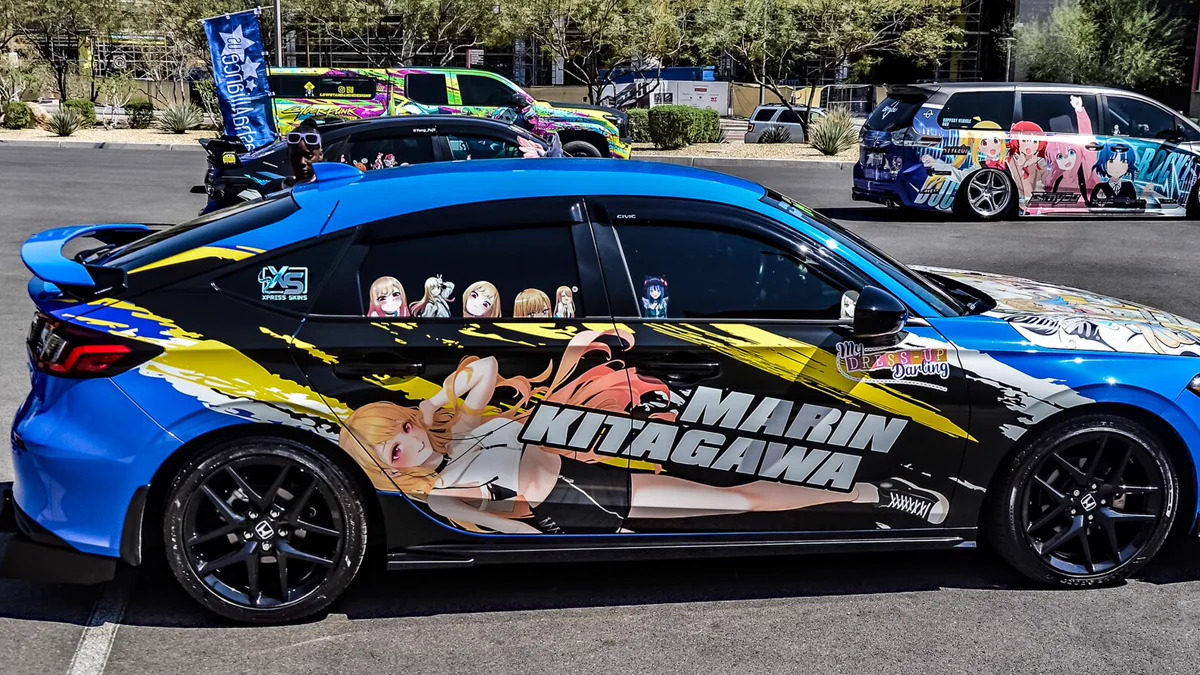
Every automotive exterior features crisp body character lines stamped into the sheet metal. These swage lines guide how light reflects across the car. When positioning a door or fender sticker, align the bottom edge of the graphic parallel to this natural body groove. Floating a decal diagonally across a body contour disrupts the vehicle visual flow and looks accidental. Align graphics to metal lines.
Rule 2: Respect the two-inch border margin
Never butt vinyl right up against rubber window trim, door edge gaps, or plastic fender flares. Always leave at least two inches of clean painted clear coat or glass around the graphic perimeter. Thermal expansion causes rubber weatherstripping to rub against vinyl edges, causing premature corner lifting and accumulated dirt buildup. Leave clean breathing room.
Rule 3: Maintain a unified palette
Keep your graphics anchored to a cohesive color story. If your vehicle paint is white and your interior accents are crimson, select decals that incorporate matching red or black linework. Scattering random neon green, pink, and orange stickers across the same panel creates visual noise that distracts from the car overall silhouette. Cohesion creates style.
Rule 4: Avoid active wiper travel zones
If you install stickers on your rear hatchback glass, test the rear wiper sweep before finalizing placement. Wiper blades dragging over vinyl edges will quickly tear fine die-cut hair strands and leave black rubber streaks across the decal surface. Position glass graphics outside the wiper travel arc. Protect fine decal edges.
Rule 5: Verify front glass visibility
Never install opaque stickers on the front windshield or front driver and passenger side windows. Keeping front glass clear is mandatory under highway safety codes and prevents blind spots during low-speed intersection turns. Reserve glass stickers exclusively for fixed rear side windows. Keep driving vision clear.
how do you scale sticker size to fit vehicle body lines?
Scale dictates visual impact. A sticker that looks massive on your bedroom desk often looks tiny and lost when slapped onto the broad sheet metal of a passenger sedan door.
Always mock up dimensions first. Cut a piece of plain paper to the exact dimensions of the decal you intend to purchase. Tape the paper cutout to the vehicle with blue painters tape, step back twenty feet, and evaluate the proportion. A peeker designed for a compact rear quarter window should measure between 4 and 6 inches wide. Conversely, a lower door graphic needs to stretch 20 to 30 inches to balance the long wheelbase of a modern automobile. Proportions make the build.
For enthusiasts curating a balanced theme without committing to full custom vinyl wraps, selecting weatherproof anime car stickers crafted from durable outdoor vinyl allows you to test spot accents along quarter glass and body lines before expanding your build. Verified outdoor vinyl resists rain, winter road salt, and summer sun exposure without lifting.
Explore our wraps and decals archive to learn more about selecting vinyl types that coordinate seamlessly with exterior vehicle modifications.
what are the legal rules for placing stickers on vehicle glass?
Automotive glass regulations exist to protect everyone on the highway. While enthusiasts enjoy personalizing their cars, law enforcement officers routinely issue equipment citations for obstructed driver visibility.
Federal standards provide clear guidance. Under official motor vehicle safety glass regulations, vehicle windshields and forward side glass must maintain high optical transmittance. Solid opaque vinyl is prohibited on the windshield, with the exception of a narrow five-inch visor strip running along the very top edge above the AS-1 line. Rear side quarter glass and rear hatch glass are generally unrestricted in most states, provided the vehicle is equipped with dual functional side-view mirrors. Know your local rules.
how can you prevent clear coat ghosting and sun fade shadows?
A major concern when installing vinyl stickers on painted exterior panels is paint ghosting. When a decal sits on a car panel for several years under direct sunlight, the vinyl shields the underlying paint from ultraviolet radiation. Meanwhile, the exposed paint surrounding the sticker undergoes gradual, microscopic clear coat oxidation and pigment fading.
When you eventually peel the sticker off, a dark, pristine silhouette of the graphic remains clearly visible against the surrounding weathered paint. This ghosting effect is especially noticeable on red, black, and dark blue vehicles.
Protect clear coat early. To prevent permanent ghosting on your daily driver, adopt these care habits:
- Keep paint sealed: Apply a high-grade ceramic spray coating or synthetic polymer wax over the entire vehicle, including over the stickers. Consistent UV protection minimizes the fading differential across the panel.
- Three-year service cycle: Plan to remove or replace exterior vinyl graphics every two to three years. Peeling decals within this timeframe allows you to polish the paint uniformly before deep oxidation sets in.
- Post-removal compound polishing: After removing an old decal, lightly polish the area with a dual-action machine polisher and medium-cut foam pad to level the clear coat and blend the surface finish.
what it means for your daily driver build
Applying anime car decals offers an affordable, fully reversible gateway into automotive styling. You do not need thousands of dollars in shop labor to make your vehicle stand out at local meets. By prioritizing cast vinyl materials, honoring body lines, leaving clean border margins, and respecting glass visibility regulations, you can build an eye-catching exterior theme that complements your lifestyle.
Always measure panel dimensions carefully before ordering decals. Take pride in your preparation, maintain clean paint, and enjoy creating a unique identity for your daily driver.
How we researched this: Vinyl film longevity ratings and legal glass positioning guidelines were gathered from commercial graphic manufacturer specification sheets and state vehicle equipment codes as of October 2026. AI drafted the structural layout; Theo Marchetti verified every placement rule and sizing formula.
garage questions
Will anime car stickers damage clear coat paint?
No, premium automotive cast vinyl will not harm factory clear coat when removed properly using gentle heat. However, cheap paper stickers or low-grade craft vinyl with aggressive solvent adhesives can leave stubborn residues and risk pulling degraded paint.
How do you wash a car that has vinyl decals?
Hand wash using the two-bucket method with a soft microfiber wash mitt and pH-neutral car shampoo. Avoid automated car washes with spinning abrasive brushes, and keep high-pressure spray wands at least twelve inches away from sticker edges.
Is it legal to put anime peekers on rear side windows?
Yes, fixed rear passenger quarter glass is legal for decal placement in almost all jurisdictions, provided your vehicle has functional driver and passenger side-view mirrors. Never place opaque decals on front side windows.
How long do exterior car decals typically last?
High-quality cast vinyl with UV over-laminate lasts between 5 and 7 years outdoors. Economy calendered vinyl stickers usually begin fading, edge-curling, or cracking within 1 to 2 years of constant sun exposure.